Home Ground Advantage Has Nothing to Do With the Crowd: A US Bettor's Guide to Venue-Specific Bowling Edges
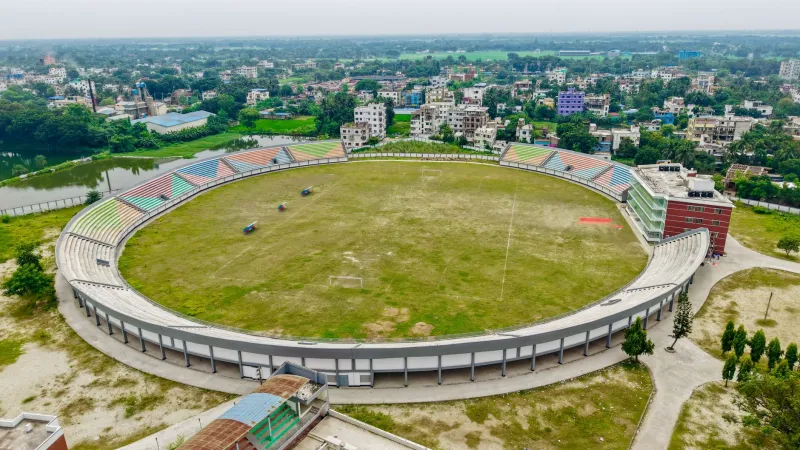
If you've ever watched football and noticed how differently a game plays at Lambeau Field in January versus SoFi Stadium in September, you already understand the concept. Environment shapes outcomes. Cricket just takes it to a whole different level — and most US bettors are leaving serious money on the table by ignoring it.
In cricket, the ground isn't just a backdrop. It's an active participant. The pitch composition, the outfield pace, the dew factor, the overhead conditions, the dimensions of the boundary — all of it influences how bowlers perform, which types of attacks thrive, and ultimately who wins. And unlike weather (which is unpredictable), venue characteristics are remarkably consistent year over year.
That consistency is your edge.
Why the Pitch Report Isn't Just Pre-Game Filler
American sports broadcasts don't really have an equivalent to the cricket pitch report. The closest analogy might be a NASCAR crew chief describing track conditions before a race — but even that doesn't capture how dramatically a pitch can dictate tactics and outcomes.
When commentators talk about a pitch being "dry and crumbling" or "hard and true," they're signaling which type of bowling attack is about to get a massive advantage. Spinners thrive on dry, dusty surfaces that grip the ball and create unpredictable bounce. Pace bowlers love hard, bouncy pitches where they can extract movement off the seam. Understanding which category a given ground falls into — and how reliably it falls there — is foundational knowledge that sharp bettors exploit regularly.
Ten Grounds, Ten Patterns Worth Knowing
Let's map out the venues that matter most for betting purposes, specifically the ones that host multiple T20 matches per season across major leagues.
Wankhede Stadium, Mumbai — The home of the Mumbai Indians is a flat-pitch paradise for batsmen early in an innings, but the drop-in pitches used for IPL games tend to slow up significantly in the second half of matches. Spinners who can vary pace become increasingly dangerous from overs 15 onward. Total runs markets consistently trend higher here in the first innings, lower in the second.
Eden Gardens, Kolkata — Dew is the dominant variable at this venue during evening games. Chasing teams historically have a significant win rate because the ball skids through effortlessly under lights once the dew settles. If you're betting match winner markets here, factor in the toss result heavily — teams winning the toss almost always choose to field second.
Chinnaswamy Stadium, Bangalore — Small ground, short boundaries, high altitude. This is a hitter's paradise and one of the most reliable high-scoring venues in world cricket. Over/under total markets at Chinnaswamy should almost always be assessed with an upward bias. Pace bowlers without a strong yorker game get carved up routinely.
Premadasa Stadium, Colombo — Counter to what many assume, this ground actually suits pace bowling with carry in the surface during certain times of year. The outfield is slower than Indian venues, which suppresses boundaries, but the carry makes pace bowlers more effective than the total scores suggest. Seam-heavy attacks are undervalued in betting markets here.
Gaddafi Stadium, Lahore — PSL games here tend to favor balanced attacks. The surface offers something for everyone early, but the key variable is how quickly it deteriorates. Games played later in a tournament block tend to produce more spin-friendly conditions as the pitch wears.
Newlands, Cape Town — Perhaps the most distinctive pace-bowling venue on this list. The mountain backdrop isn't just scenic — the atmospheric conditions create consistent swing and seam movement. Pace bowlers with strong swing credentials are systematically underpriced in bowling performance markets here. Teams with three genuine pace options have a structural advantage.
Bellerive Oval, Hobart — Big Bash games here are routinely low-scoring by T20 standards. The outfield is slower, the boundaries are deeper, and the overhead conditions often assist swing bowling. Fade the high-total teams here; the ground neutralizes batting power.
Sabina Park, Kingston — CPL cricket here plays fast. The outfield is lightning quick, boundaries are reachable, and pace bowlers who can generate bounce are dangerous. But the key betting angle is that totals here swing dramatically based on which team bats first — the pitch tends to ease up significantly in the second innings.
MCG, Melbourne — The size of this ground makes it genuinely different from most T20 venues. The straight boundaries are long, which suppresses lofted straight drives that batsmen rely on. Teams with strong leg-side hitters and bowlers who bowl straight lines have a consistent edge here that betting markets often undervalue.
Narendra Modi Stadium, Ahmedabad — A newer venue that's already establishing clear patterns. The drop-in pitches used for IPL games here tend to be two-paced — shots that should go for six sometimes don't carry. Spinners are effective from earlier in the innings than at most Indian grounds.
How to Actually Use This in T20 Betting Markets
The real leverage comes from T20 leagues where these grounds host 8–12 matches per season. That repetition means the venue patterns show up across a large enough sample to bet with confidence.
Here's a simple process. Before placing any T20 match bet, answer three questions: What type of surface does this ground consistently produce? Which team's bowling attack is better suited to those conditions? Does the toss result at this venue materially affect the outcome?
If your answers point in a consistent direction and the betting market hasn't fully priced in the ground advantage, you've found an edge that has nothing to do with team form or player rankings.
Most US bettors are still reading box scores. You can be reading the pitch.