Pretty Odds, Ugly Returns: The Underdog Illusion Costing US Cricket Bettors Real Money
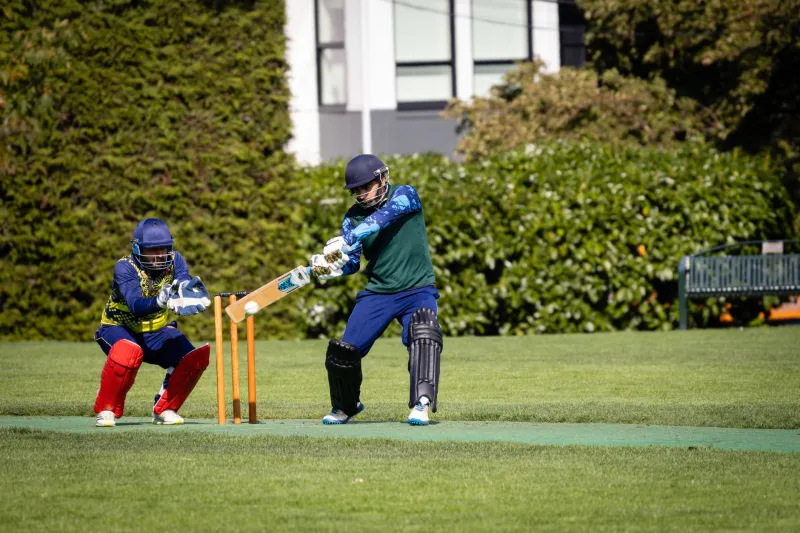
There's a moment every new cricket bettor knows. You open the app, scan the odds, and see a +380 on a team you've actually heard of. Coming from NFL betting, where a live underdog at +300 feels like highway robbery, that number looks like a steal. So you fire on it. And then you lose. And then you do it again the next week.
This isn't bad luck. It's a structural problem — and until you understand how cricket's odds math differs from what US sportsbooks have trained your brain to expect, you're going to keep falling into the same trap.
Why Cricket Underdogs Look So Attractive (And Aren't)
In American football or basketball, the gap between a favorite and an underdog is usually tight. Parity is baked into the league structures. The salary cap in the NFL, the draft lottery in the NBA — these systems exist specifically to prevent dominant teams from running away with everything. As a result, a +250 underdog in the NFL genuinely has a meaningful shot. The implied probability on that line — roughly 28.5% — isn't wildly off from reality.
Cricket doesn't work like that. International cricket, in particular, has enormous gaps between elite and developing nations. A +380 line on, say, Zimbabwe against England implies roughly a 20.8% win probability. But the actual probability? Depending on format and conditions, it might be closer to 8-12%. The market still looks generous by US standards, but the book has already priced in the massive talent gap. You're not getting value — you're paying for the illusion of it.
Franchise leagues like the IPL or the SA20 narrow that gap somewhat, since squads are more evenly distributed. But even there, the ceiling on genuine underdog probability is lower than most US bettors assume.
The Conversion Problem Nobody Talks About
Here's where the math gets sneaky. American odds and their implied probabilities feel intuitive to anyone who grew up betting US sports. But cricket odds — especially when displayed in decimal format on international books — require a mental conversion that most casual US bettors don't bother doing accurately.
Decimal odds of 4.50 feel like a big number. In American odds, that's roughly +350. And +350 sounds huge. But the implied probability is just 22.2%. That's not a lock. That's not even close to a coin flip. If you're betting that line expecting NFL-style underdog swings, you're operating on completely different mathematical terrain without realizing it.
The fix is simple but requires discipline: always convert to implied probability before evaluating a cricket line. Don't let the raw number seduce you. A quick formula — divide 100 by (American odds + 100) for positive lines — gives you the implied win percentage in seconds. Make that your first move, every time.
When the Market Actually Gets It Wrong
None of this means underdogs are never worth backing. The point isn't to avoid them entirely — it's to distinguish between a genuinely mispriced challenger and one that just looks juicy.
Genuinely mispriced underdog lines in cricket tend to share a few characteristics:
Recency bias in the odds. If a team lost badly in their last series, books often shade them harder than the underlying talent warrants, especially in a different format or on different pitches. A side that got demolished in Test cricket might be perfectly competitive in a T20 context.
Lineup information lag. Cricket squads rotate heavily. If a key bowler is rested or a top-order batter is managing a minor injury, and that news hasn't fully filtered into the line yet, the underdog price can be genuinely inflated. This is where being plugged into official team announcements — and sometimes social media chatter — pays off.
Format mismatches. Some teams genuinely outperform their global rankings in specific formats. Afghanistan, for example, has historically been formidable in T20 cricket relative to how markets price them. Knowing which teams punch above their weight in which formats is edge you can actually use.
The Trap in Action: A Hypothetical You'll Recognize
Imagine you're looking at a T20 international between a top-ranked side and a mid-tier team sitting at +320. Your NFL brain says, "A +320 underdog that's actually a decent team? That's almost always worth a look." So you back them.
But when you run the implied probability, that line says the underdog wins roughly 23.8% of the time. Now ask yourself: in a T20 match, on a pitch that favors the favorite's pace attack, with the favorite at full strength and the underdog missing their best spinner — does 23.8% feel right? Or does 14% feel closer?
If it's the latter, the book isn't giving you value. They're giving you a number that sounds big by American standards while still holding a comfortable edge.
Building a Better Filter
At CricBets99, the whole point is finding your edge — not chasing numbers that feel good. When you're evaluating a cricket underdog line, run through this quick checklist before committing any units:
- Convert to implied probability immediately. Stop looking at the raw odds number.
- Estimate your own probability. Even a rough gut estimate — 15%, 25%, 35% — forces you to think about the matchup rather than the number.
- Check for genuine information asymmetry. Is there something the market hasn't priced in yet? Lineup news, pitch conditions, travel fatigue?
- Compare formats. Does this team's historical performance in this specific format justify backing them at this price?
If the implied probability is close to your estimate and there's a real reason the market might be off, you've found a genuine underdog spot. If the odds just look big, you haven't.
The Bottom Line
Cricket betting rewards precision. The US sports betting market has spent years training American bettors to read odds in a specific cultural context — one where parity is enforced, formats are short, and +300 genuinely means something. Cricket blows that framework apart, and the books know it.
The underdog trap isn't a conspiracy. It's just math meeting muscle memory. Break the habit, run the conversion, and you'll immediately start seeing cricket lines more clearly than 80% of the US bettors sharing the same market with you.