The Line Nobody's Watching: Women's Cricket Is Growing Faster Than the Odds Can Keep Up
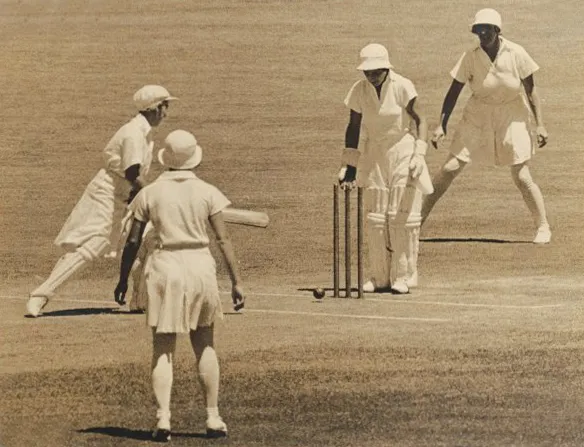
Photo: Unknown authorUnknown author, Public domain, via Wikimedia Commons
There's a specific kind of opportunity in sports betting that only exists for a few years at a time: a market with real money flowing through it, priced by people who haven't quite figured out what they're pricing yet.
Women's cricket is in that window right now. The WPL has become a genuine franchise product. The WBBL is a fixture of the Australian summer. International series have real broadcast reach and real handle. And yet a lot of the numbers you'll see on a betting board still look like they were built by copying the men's file, changing the header, and hitting save.
That's not a complaint. It's a map.
Growth Is Real, Pricing Is Tacked On
Sportsbooks scale by template. When a new league gets added to the menu, the path of least resistance is to reuse a model structure from the closest existing product — in this case, men's T20 — and calibrate it lightly. That works fine if the underlying sport behaves the same way. It doesn't, quite.
The result is a set of markets that are directionally sensible but structurally off. Totals that feel a touch high. Death-over expectations that assume a boundary rate that isn't there. Toss assumptions borrowed from a competition with different field sizes, different pitches, and a different balance between bat and ball.
The betting public hasn't fully arrived either, which cuts both ways. Fewer sharp eyes means slower line movement. Slower line movement means the mistakes stay up longer.
Where the Copy-and-Paste Breaks Down
The biggest modeling error is boundary dependency. A meaningful share of men's T20 scoring is six-driven. In the women's game, the scoring mix leans harder on placement, running between the wickets, and manipulating the field. That changes how a total should be built, and it changes how a late-innings surge should be priced.
If a book's death-overs line assumes the six rate of a men's league, the over on second-innings runs is going to be systematically overpriced. Conversely, if the model underweights running, it can miss how quickly a set batter can move a score along without clearing the rope.
Second, spin. Certain women's competitions have leaned heavily on spin, both in terms of overs bowled and wicket share. A team-total model built on pace-dominant assumptions will misprice the middle of an innings in those leagues, sometimes badly.
Third, and this is the subtle one: match state variance. Squads are smaller, standout players carry proportionally more of the load, and one early wicket can reshape an entire innings more dramatically than it would in a deeper men's lineup. Books that use generic wicket-impact curves will consistently underprice how much a top-order collapse actually costs.
The Toss Question
The toss gets overrated everywhere, but it's worth flagging here because it's a place where lazy assumptions get copy-pasted. Chase-versus-defend balance in women's T20 varies meaningfully by venue and competition, and it varies in ways the pre-match market doesn't always reflect. Rather than betting the toss, bet the venue-toss combination once you've seen enough of a competition to know the pattern. That's a slower, less exciting edge — and a much more durable one.
Thin Markets Are Both the Problem and the Point
Let's be honest about the downside. Limits are lower. Market depth is shallower. Vig tends to be wider than you'd see on an IPL match, and some books offer only a handful of derivative markets. If you're used to shopping six books on a men's international, you may find two and a half here.
That friction is the reason the inefficiency exists. A soft line nobody can bet into stays soft. Your job is to find the books that do take a real position, compare prices across them, and accept that your position size has to match the market's depth. Getting aggressive into a shallow market is how you get limited for no reason.
Timing Beats Analysis Here
In a mature market, the edge comes from better modeling. In a young one, it comes from being early. Team news in women's competitions often travels through smaller, tighter channels — squad announcements, press availability, social posts from the team itself. A late change to the top order or a bowler being rested can move a line significantly, and the window before it does is longer than you'd expect.
If you're going to spend time on this market, spend it on information, not indicators. Follow the competitions properly. Watch the matches, not just the scorecards. That's a real time commitment, and it's the price of admission for an edge this clean.
What to Do Before the Crowd Shows Up
Start with volume discipline. Treat women's cricket as its own bankroll category with its own unit size, not as overflow from your men's T20 betting.
Then build a short list of competitions you'll actually watch and get to know — two or three is plenty — and ignore the rest until you have a read. Generic models applied across four leagues will lose to one model applied deeply to one league.
Finally, price-check obsessively. In a market this young, the number on the screen isn't a consensus, it's one book's first guess. The gap between the best and worst price on the same market is often wider than the edge you'd find after hours of analysis.
Markets don't stay inefficient forever. The books that are copying men's models today will hire people who fix it. Until then, the fastest-growing corner of cricket betting is also the least carefully priced — and that's a combination worth paying attention to.