Slower, Longer, Sharper: Why Test Cricket Is the Last Soft Line on the Board

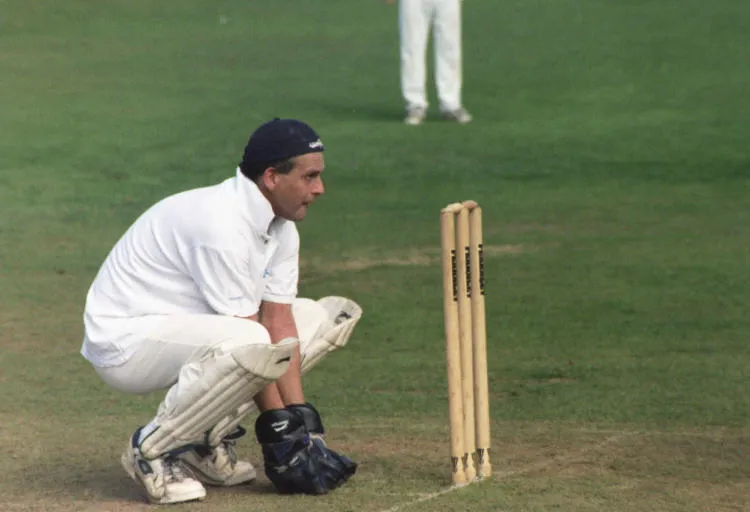
Photo: Unknown (for the Evening Post of Wellington), Public domain, via Wikimedia Commons
Here is an uncomfortable observation about the US cricket bettor: we are all crowded into the same room. T20 leagues, ODIs, franchise cricket, anything that finishes before dinner. Test matches sit there, red ball, five days, start times that ruin your sleep, and almost nobody touches them.
That neglect is a gift. Whatever format draws the most handle is the format that gets the sharpest prices, the most algorithmic attention, and the tightest limits. Test cricket gets the leftovers. And leftovers, in betting, often means softer lines.
Why Test Markets Stay Loose
Books are not charities. They price what their customers bet. T20 is where the money goes, so T20 gets the traders, the models, the live pricing engine, and the constant repricing that comes with heavy volume. Test cricket is where the money does not go, so it gets a template: a couple of key numbers, a draw price, and a human being checking in every so often.
There is a second reason. Test matches are genuinely hard to model. A day-one model cannot know how a pitch will behave on day four. It cannot know when a captain will declare, whether a team will enforce the follow-on, how much weather will intervene, or which bowler will break down in the second innings. Because those variables are hard, sportsbooks retreat to safer ground: they lean on reputation, rankings, and last series results.
That is exactly the recipe for a soft line. Reputation lags reality. Rankings lag pitches. And last series results lag the actual squad on the park, especially in a format where a first series in a foreign country is a genuine skill gap.
Session Betting Is the Format's Real Edge
If you only ever bet the match result, you are wasting Test cricket. The sharpest window in the sport is the session market.
A session is two hours of cricket. It is short enough to be affected by a single spell, a single partnership, and it is long enough that the book's broad match model does not really govern the price. Books often set session lines using a simple run-rate heuristic: this team scores at about this pace, therefore this many runs.
Real Test cricket does not work that way. Sessions are lumpy. A team 30 for none overnight may go nowhere for an hour and then score 110 in the second hour. Conditions change mid-session. A new ball changes everything. A set batter retiring hurt changes everything. Tail-end partnerships change everything.
If you are watching and the book is not, you have an edge that does not exist in T20, where a live pricing engine can adjust a total within a minute of a wicket. In Tests, the market's reaction speed is measured in overs, not seconds.
Draw Pricing Behaves Like a Weather Derivative
Test cricket is the only format where the draw is a serious outcome, and it is the outcome books handle most crudely. Draw prices get set early and then drift slowly, often lagging the actual forecast by a full day.
That is a mistake you can trade against. The draw becomes live when three things align: a flat pitch, a forecast with real interruption risk, and a leading team that has no incentive to force a result. It becomes nearly dead when the forecast clears and the pitch starts taking turn.
Because most books are not running a granular weather model for a match in another time zone, the draw price often sits in the same place regardless of updated forecasts. If you are checking radar loops the way a hurricane chaser checks cones, you will see the market move after you do. That is fine. That is the job.
Follow-On, Declarations, and the Things Models Forget
Two Test-specific rules generate consistently mispriced derivatives.
The first is the follow-on. Enforcing it means bowling a tired attack twice in quick succession. Not enforcing it means batting again to protect the bowlers. Books tend to price this as if the decision is automatic and the consequence is minor. In practice, the follow-on decision reshapes fourth-innings totals and the draw price simultaneously, and the market usually reprices only after the captain has already made the call.
The second is declaration risk. A captain batting first on a flat deck with a big score in front of him has a live incentive to bat longer than the model expects. If your over or total bet depends on an accurate innings-length estimate, declarations are the variable that quietly kills more tickets than rain does.
The Discipline Tax
Test betting is not free money. It charges a tax in a different currency: attention and patience.
You will hold positions for three or four days. You will watch a session where nothing happens and wonder why you bothered. You will get burned by a fourth-innings collapse that no one predicted, or by a declaration that arrives thirty runs earlier than you wanted. The volume of bets is lower, the payouts are slower, and the entertainment-per-hour is worse.
That is precisely why the prices stay soft. If it were fun and easy, everyone would do it.
Where to Start
Pick one series and follow it properly. Watch the sessions, not the highlights. Build your own sense of how quickly the pitch is deteriorating. Track the draw price against the forecast day by day and note how slowly the book responds. Bet session totals and innings totals before you touch the match result, because those are the markets where the lag is most visible.
Test cricket rewards the bettor who treats it like a slow-moving market rather than a spectacle. The crowd is in the wrong room, and the door is still open.