The Challenge Flag Is a Tell: How DRS Review Habits Leak Real Value Into Live Cricket Odds

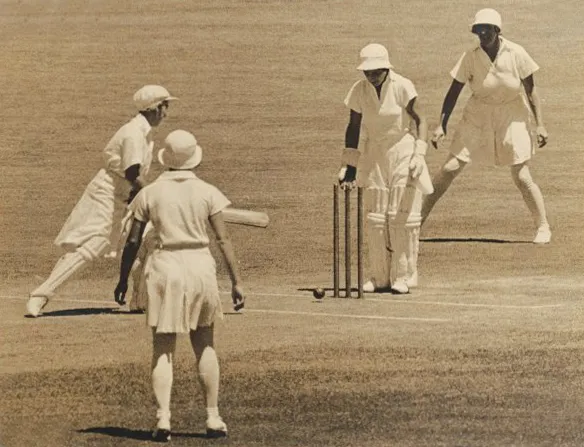
Photo: Gavin_Lisburn, CC BY-SA 3.0, via Wikimedia Commons
Baseball spent the better part of a decade screaming at itself about whether a machine should call balls and strikes. By 2026 the argument has mostly played out at the big-league level: managers get a limited number of challenges, a tracking system does the second-guessing, and everyone has quietly adjusted. Most fans walked away from that fight talking about tradition. Bettors should have walked away talking about process, because the interesting part was never the decision itself — it was the pattern of who asks for a review, when they ask, and how often they're right.
Cricket has been running that same experiment since 2008 under a different label. The Decision Review System is the closest thing the sport has to ABS, and the markets treat it roughly like a novelty. That is a mistake, and it is one of the cleaner edges still sitting in plain sight for anyone who watches cricket with a baseball brain.
Two Sports, One Vocabulary
If you have ever sat through extra innings and watched a manager burn his last challenge on a pitch that was clearly a strike, you already understand the emotional texture of DRS. A captain with a review left is a different animal from a captain without one. The fielding side gets skittish about appealing. The batter starts playing shots he would not otherwise play. Books, by and large, do not adjust mid-over for any of this.
That is your first opening. Review availability is public information. It is also a genuine tactical input in the next four overs. When you see a captain burn a review on a hopeless lbw shout in the eighth over of a T20, the live win-probability lines barely twitch. They should.
What the Numbers Actually Price
Sportsbooks are decent at pricing the obvious DRS outcomes: an overturned wicket, a successful review, a wasted challenge. They are noticeably worse at three things.
Review inventory as a resource. A team with two reviews left and a team with zero reviews left are not the same team, even if the scoreboard is identical. The first side can attack the stumps with impunity. The second side's spinners lose their most valuable weapon.
Umpire overturn rates. Some officials get overturned a lot. Some almost never do. That single stat quietly governs how much a review is worth to each side at that venue, and it almost never shows up in a live line.
The cost of a bad review. Books price a failed review like a neutral event. It is not. From the fielding side, a burned review means the next fifty-fifty shout goes unchallenged. From the batting side, it means you cannot contest a genuinely bad one later. Compounding loss, and nobody is charging for it.
The Umpire Is a Betting Input Now
This is where the MLB parallel gets uncomfortable for the books. In baseball, umpire strike-zone tendencies became a cottage industry long before the robot arrived. In cricket, the equivalent work — official-by-official review stats, lbw overturn rates, how often a given umpire's decisions get sent upstairs — is still done by a handful of people and priced by almost no one.
If a match official has a reputation for giving close lbw shouts and a high overturn rate, that changes the value of every review available to both teams. It also changes how bowlers target the pads in the middle overs. Watch a captain who knows the umpire's profile. He will attack the stumps more aggressively because he trusts the review math. The book will price that as ordinary aggression.
Timing Is the Loudest Tell
Review timing is the closest thing cricket has to a telegraph. A captain who reviews inside eight seconds has usually seen something concrete. A captain who burns fifteen seconds and then sends it up is guessing.
The betting angle here is not to copy the captain. It is to notice when the crowd noise and the broadcast reaction push the live line harder than the actual probability shifted. Live cricket markets are still reaction-heavy. A dramatic review, whether it succeeds or fails, tends to move the price. The underlying situation — who has reviews, who has bowling left, who is genuinely under pressure — often moves less.
That gap between the headline and the reality is where you shop.
The 2026 Development Nobody Has Priced
Here is the part worth watching this season. The same technology fights that reshaped baseball are creeping into cricket's structures. Automated calling of no-balls and wides is no longer a thought experiment. Machine-assisted line decisions are already in place at major tournaments. Every incremental shift toward automation reduces the value of a challenge and increases the value of the machine's consistency.
When that happens, the entire review economy changes. Fewer wasted reviews, different captain behavior, a completely different risk profile in the middle overs. The books will lag that transition by a season, at minimum. If you want a genuine information edge in 2026, knowing which competitions are moving toward automated calls — and how captains adapt when the safety net shrinks — is worth more than any tip sheet.
How to Actually Use It
Keep three notes per match: reviews remaining for each side, the umpire's historical overturn lean, and the point in the innings where a review becomes economically decisive. Then watch the live line for the two minutes after a review is taken. If the price swings hard on the drama and not on the math, you have a side to bet.
It is not glamorous work. It is the same work baseball bettors have been doing with umpire scorecards for years. Cricket just happens to be handing it to you on a bigger, noisier plate.